In the 21st century, independent and mainstream filmmakers alike began dismantling these stereotypes. Modern cinema treats the blended family not as a gimmick, but as a fertile ground for exploring identity, grief, loyalty, and love.
Unlike older films where step-siblings instantly bonded, modern cinema explores the resentment of shared spaces, divided attention, and forced intimacy. It also highlights the unique bond that can form when half-siblings or step-siblings realize they are navigating the same adult-made chaos together. Diversity and Intersectionality momwantstobreed sheena ryder stepmom is rea
The Kids Are All Right (2010) broke ground by showcasing a blended family structure headed by a lesbian couple, disrupted and reshaped by the introduction of their children's anonymous sperm donor. The film treats their family dynamics with the same mundane, messy realism as any heterosexual household, proving that the challenges of communication, boundaries, and teenage rebellion are universal, regardless of the family's specific architecture. In the 21st century, independent and mainstream filmmakers
The difference between past and present, in films like A Nice Indian Boy and My Mother's Wedding , is the validation of the process . Modern cinema rarely suggests that a new blended family will immediately work seamlessly. Instead, it highlights: It also highlights the unique bond that can
If you want to explore this topic further, let me know if you would like to focus on a specific (like comedy or drama), analyze international films , or look into television shows that handle these dynamics. Share public link
Directors often use wide shots to show physical distance between step-parents and step-children in early scenes, gradually moving to tighter, shared frames as emotional bonds form.
This public link is valid for 7 days and shares a thread, including any personal information you added. This link or copies made by others cannot be deleted. If you share with third parties, their policies apply. Can’t copy the link right now. Try again later.
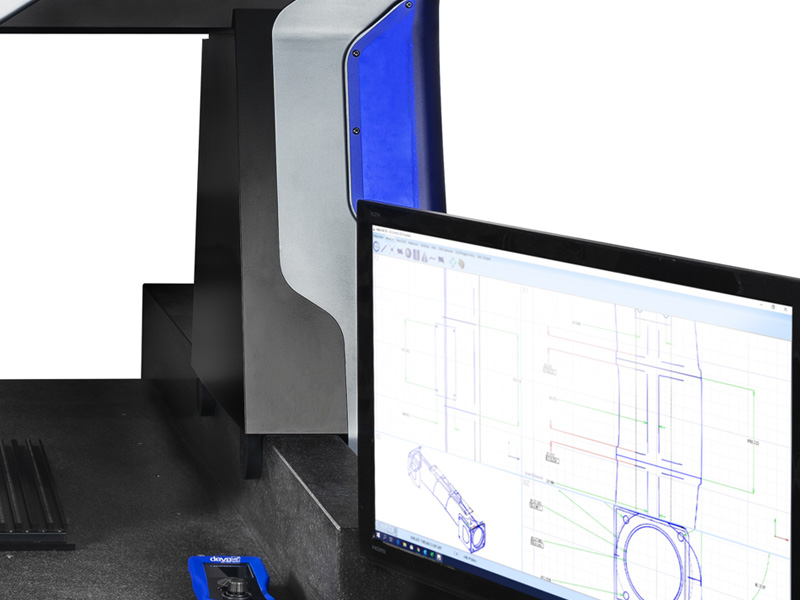
The Horizon CMM breaks new ground in design and innovation using frictionless linear drives, which are the key to its fast and exceptionally smooth motion.
The granite table and granite Y-axis rail has been designed to take full advantage of the natural thermal density of this remarkable material. The Y-axis linear drive system has been positioned away from the Y-axis linear encoder so that the heat generated by the linear drive is absorbed by the granite without affecting metrology performance.
Drawing upon the tremendous success of the Horizon, the Horizon L has a larger X-Y-Z axis travel whilst utilising the same frictionless linear drives.
The entire design of the Horizon L has been optimised to take full advantage of parts already used on the Horizon whilst improving the stiffness-to-weight ratio across the bridge assembly. Most notably: The Y-axis rail is 200mm taller so that the same right-hand-side linear drive system is common and improves rigidity; the carriage assembly has reduced in size and weight, without compromising metrology performance, to improve the stiffess-to-weight ratio; the Z-axis motor has increased power to optimise its performance; the left-hand-side air bearing assembly has a custom extruded profile to keep weight to an absolute minimum and maintain stiffness.
In the 21st century, independent and mainstream filmmakers alike began dismantling these stereotypes. Modern cinema treats the blended family not as a gimmick, but as a fertile ground for exploring identity, grief, loyalty, and love.
Unlike older films where step-siblings instantly bonded, modern cinema explores the resentment of shared spaces, divided attention, and forced intimacy. It also highlights the unique bond that can form when half-siblings or step-siblings realize they are navigating the same adult-made chaos together. Diversity and Intersectionality
The Kids Are All Right (2010) broke ground by showcasing a blended family structure headed by a lesbian couple, disrupted and reshaped by the introduction of their children's anonymous sperm donor. The film treats their family dynamics with the same mundane, messy realism as any heterosexual household, proving that the challenges of communication, boundaries, and teenage rebellion are universal, regardless of the family's specific architecture.
The difference between past and present, in films like A Nice Indian Boy and My Mother's Wedding , is the validation of the process . Modern cinema rarely suggests that a new blended family will immediately work seamlessly. Instead, it highlights:
If you want to explore this topic further, let me know if you would like to focus on a specific (like comedy or drama), analyze international films , or look into television shows that handle these dynamics. Share public link
Directors often use wide shots to show physical distance between step-parents and step-children in early scenes, gradually moving to tighter, shared frames as emotional bonds form.
This public link is valid for 7 days and shares a thread, including any personal information you added. This link or copies made by others cannot be deleted. If you share with third parties, their policies apply. Can’t copy the link right now. Try again later.
"Having the Horizon machine to back up what the other Aberlink CMM is saying has given the guys a lot of confidence, We are very impressed with the accuracy and repeatability of the Horizon CMM."
Read more...
Ready to find out more?
Request Information